 +91 9618519486

 Yashoda Hospital,
Hitec City
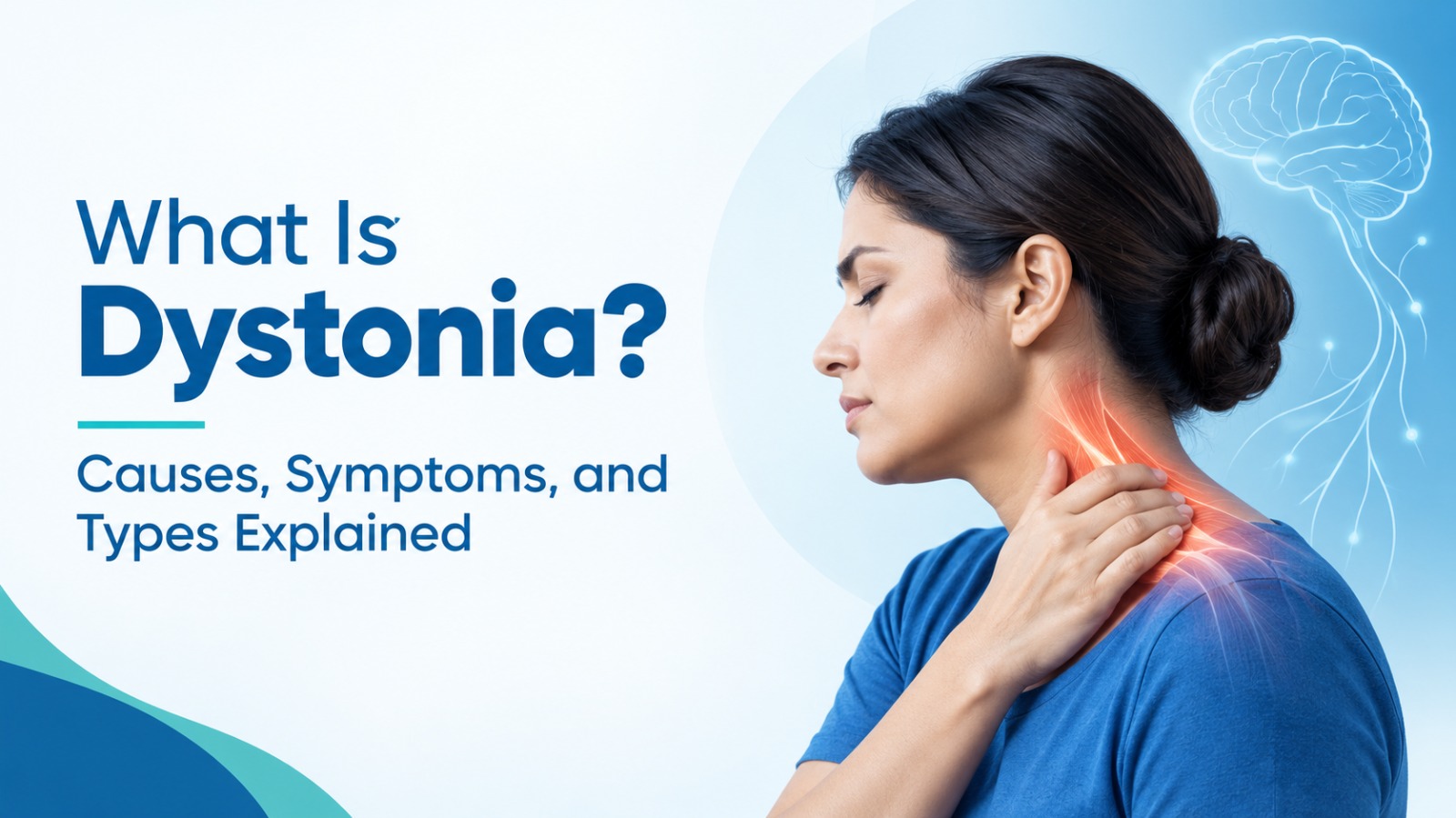
Have you noticed your neck tilting involuntarily, your eyelids closing on their own, or your hand cramping every time you write? These can be signs of dystonia, a neurological movement disorder that is often misunderstood and frequently confused with Parkinson’s disease or a muscle problem.
If you are searching for what dystonia is, its causes, or its symptoms, this guide covers everything in plain language, including when to see a movement disorder specialist in Hyderabad.
What Is Dystonia?
Dystonia is a neurological movement disorder in which muscles contract involuntarily, causing twisting movements, repetitive motions, or abnormal postures. The word "dystonia" comes from the Greek words for “abnormal tone." The problem is not in the muscles themselves. It lies in the brain’s signaling, particularly in the basal ganglia, the region that helps control movement.
Dystonia can affect one body part or the whole body. It can begin in childhood or adulthood, and it can be mild or severely disabling. You may also see the older term dystonia musculorum deformans, which refers to a severe inherited form that begins in childhood.
Dystonia Symptoms: How to Recognize the Signs
Dystonia symptoms vary depending on the body part involved. Common signs include:
- Involuntary twisting or turning of the neck, trunk, arm, or leg
- Repetitive, patterned movements or sustained muscle spasms
- Abnormal postures, such as a tilted head or a twisted foot
- Tremor that accompanies the abnormal posture (dystonic tremor)
- Muscle pain and fatigue from constant contraction
- Eyes that blink excessively or close involuntarily
- A strained or breathy voice
- Cramping in the hand during tasks such as writing or playing an instrument
- Symptoms that worsen with stress, fatigue, or specific tasks, and sometimes ease with a light touch to the affected area (a “sensory trick”)
Because dystonia can start subtly, many people spend months or years being treated for the wrong condition. If you notice repetitive involuntary movements or postures, early evaluation by a neurologist matters.
Types of Dystonia
Doctors classify dystonia by the part of the body affected:
| Type | Body Area Involved |
|---|---|
| Focal dystonia | A single body part |
| Segmental dystonia | Two or more adjacent body parts |
| Multifocal dystonia | Two or more non-adjacent body parts |
| Generalized dystonia | Most of the body, usually including the trunk and limbs |
| Hemidystonia | One side of the body |
Common Types of Focal Dystonia
- Cervical dystonia (spasmodic torticollis): The neck twists or tilts involuntarily and is often painful. It is the most common focal dystonia.
- Blepharospasm: Involuntary eyelid closure or excessive blinking.
- Writer’s cramp and task-specific dystonia: The hand cramps during writing, typing, or playing an instrument.
- Spasmodic dysphonia: Spasms of the vocal cords affect speech.
- Oromandibular dystonia: The jaw, mouth, and tongue are affected.
Dystonia is also described by age of onset (childhood-onset or adult-onset) and by cause (primary or secondary, explained below).
What Causes Dystonia?
The causes of dystonia fall into four broad groups.
1. Genetic and Inherited Causes
Some dystonias run in families. Genes such as TOR1A (DYT1) and THAP1 are linked to certain forms. Dopa-responsive dystonia, a genetic form that begins in childhood, often improves dramatically with levodopa treatment. If you are wondering, "Is dystonia genetic?" the answer is that sometimes it is, but many adult-onset cases have no clear family history.
2. Acquired (Secondary) Causes
Dystonia can develop after damage or disease affecting the brain, including:
- Stroke or brain injury
- Birth-related brain injury or cerebral palsy
- Brain infections or tumors
- Exposure to certain medicines, such as some anti-psychotic and anti-nausea drugs (drug-induced or tardive dystonia)
- Toxins and metabolic disorders
3. Dystonia Linked to Other Neurological Diseases
Dystonia can be a feature of other conditions, including Parkinson’s disease, Huntington’s disease, and Wilson’s disease, a treatable genetic disorder of copper metabolism. Because Wilson’s disease is treatable but serious when missed, doctors check for it in younger patients who develop dystonia or other movement problems.
4. Idiopathic Dystonia
In many people, no specific cause is found despite thorough testing. This is called idiopathic dystonia.
Dystonia vs. Parkinson’s Disease: What’s the Difference?
The two conditions are often confused because both affect movement, and dystonia can occur within Parkinson’s disease, for example, as foot cramping or curling toes. The key difference:
- Parkinson’s disease typically causes slowness of movement, rigidity, and resting tremor.
- Dystonia causes sustained or repetitive twisting movements and abnormal postures.
An accurate diagnosis by a neurologist is essential because treatments differ. (Read more: Dystonia vs. Parkinson’s Disease: Key Differences.)
How Is Dystonia Diagnosed?
There is no single test for dystonia. Diagnosis rests mainly on a detailed clinical examination by a neurologist who recognizes the patterns of movement. Depending on your case, your doctor may recommend:
- MRI of the brain to look for structural causes
- Blood and urine tests, including tests for Wilson’s disease and other metabolic conditions
- Genetic testing, especially in young-onset or familial cases
- A trial of levodopa to identify dopa-responsive dystonia
- Review of current medications that could be triggering symptoms
Dystonia Treatment Options
Dystonia is usually a long-term condition, but it is highly treatable in the sense of symptom control, and many people achieve significant relief. Options include:
1. Botulinum Toxin (Botox) Injections
The first-line treatment for most focal dystonias, such as cervical dystonia, blepharospasm, and writer’s cramp. Small amounts injected into the overactive muscles relax them, with effects lasting roughly three months before repeat sessions are needed.
2. Oral Medications
Depending on the type, doctors may use anticholinergics, muscle relaxants, benzodiazepines, or levodopa (particularly if dopa-responsive dystonia is suspected).
3. Deep Brain Stimulation (DBS)
For people with severe dystonia that does not respond adequately to medicines or injections, deep brain stimulation can be an effective option. A small device delivers controlled electrical pulses to specific brain areas, helping regulate abnormal movement signals. Choosing an experienced team matters. (See our guide: How to Choose the Right Neurosurgeon for DBS Surgery.)
4. Physiotherapy, Occupational Therapy, and Speech Therapy
Supportive therapies help maintain function, reduce pain, and teach practical techniques, including sensory tricks.
5. Treating the Underlying Cause
When dystonia is secondary to another condition, for example, Wilson’s disease, treating that condition is central to management.
Treatment is individualized. What works well for cervical dystonia may not suit generalized dystonia.
Living with Dystonia: Practical Tips
- Keep a symptom diary noting triggers such as stress, fatigue, and specific activities.
- Manage stress and prioritize sleep, since both can worsen symptoms.
- Follow through with physiotherapy and prescribed exercises.
- Tell every doctor about your condition before starting new medicines.
- Seek support from family, counsellors, or patient groups, as dystonia can affect emotional wellbeing too.
Dystonia Treatment in Hyderabad: When Should You See a Specialist?
Consult a neurologist or movement disorder specialist in Hyderabad if you notice:
- Involuntary twisting, tilting, or repetitive movements
- Persistent neck, hand, or eyelid spasms
- Symptoms that interfere with work, writing, speaking, or walking
- Dystonia-like symptoms appearing in a child or young adult
- Movement problems that began after starting a new medicine
At Yashoda Hospitals, Hyderabad, Prof. Dr. Rupam Borgohain evaluates and treats dystonia and other movement disorders, including options such as botulinum toxin therapy and deep brain stimulation where appropriate.
Frequently Asked Questions About Dystonia
1. What is dystonia in simple words?
Dystonia is a brain-related movement disorder in which muscles contract on their own, causing twisting movements or abnormal postures.
2. What causes dystonia?
Causes include genetic mutations, brain injury, stroke, infections, certain medicines, and other neurological diseases. In many people, no cause is found.
3. Is dystonia a serious disease?
Severity varies widely. Some people have mild, limited symptoms, while others have disabling generalized dystonia. Most forms are not life-threatening, but they can significantly affect quality of life if untreated.
4. Can dystonia be cured?
Most forms cannot be permanently cured, but symptoms can often be well controlled with botulinum toxin, medicines, therapy, or DBS.
5. Is dystonia the same as Parkinson’s disease?
No. They are separate conditions, though dystonia can occur in people with Parkinson’s disease.
6. Is dystonia hereditary?
Some types are inherited, but many adult-onset forms are not clearly hereditary.
7. Which doctor treats dystonia?
A neurologist, ideally one specializing in movement disorders. For severe cases, a team including a functional neurosurgeon may be involved for DBS.
8. Where can I get dystonia treatment in Hyderabad?
You can consult a movement disorder specialist in Hyderabad, where evaluation, botulinum toxin therapy, and advanced options such as DBS may be available. Contact the hospital or specialist to confirm available services.
Conclusion
Dystonia is a neurological movement disorder that causes involuntary muscle contractions, leading to twisting movements and abnormal postures. It can affect one body part or the whole body, and it is often mistaken for Parkinson’s disease or a muscle problem.
The good news is that dystonia is manageable. Botulinum toxin injections, medicines, physiotherapy, and deep brain stimulation (DBS) for severe cases can bring real relief, especially when the condition is diagnosed early.
If you notice persistent involuntary movements, neck tilting, eyelid spasms, or hand cramping, consult an experienced movement disorder specialist in Hyderabad for a proper evaluation.
Disclaimer: This article is for general education and does not replace personal medical advice. Please consult a qualified neurologist for diagnosis and treatment.