 +91 9618519486

 Yashoda Hospital,
Hitec City
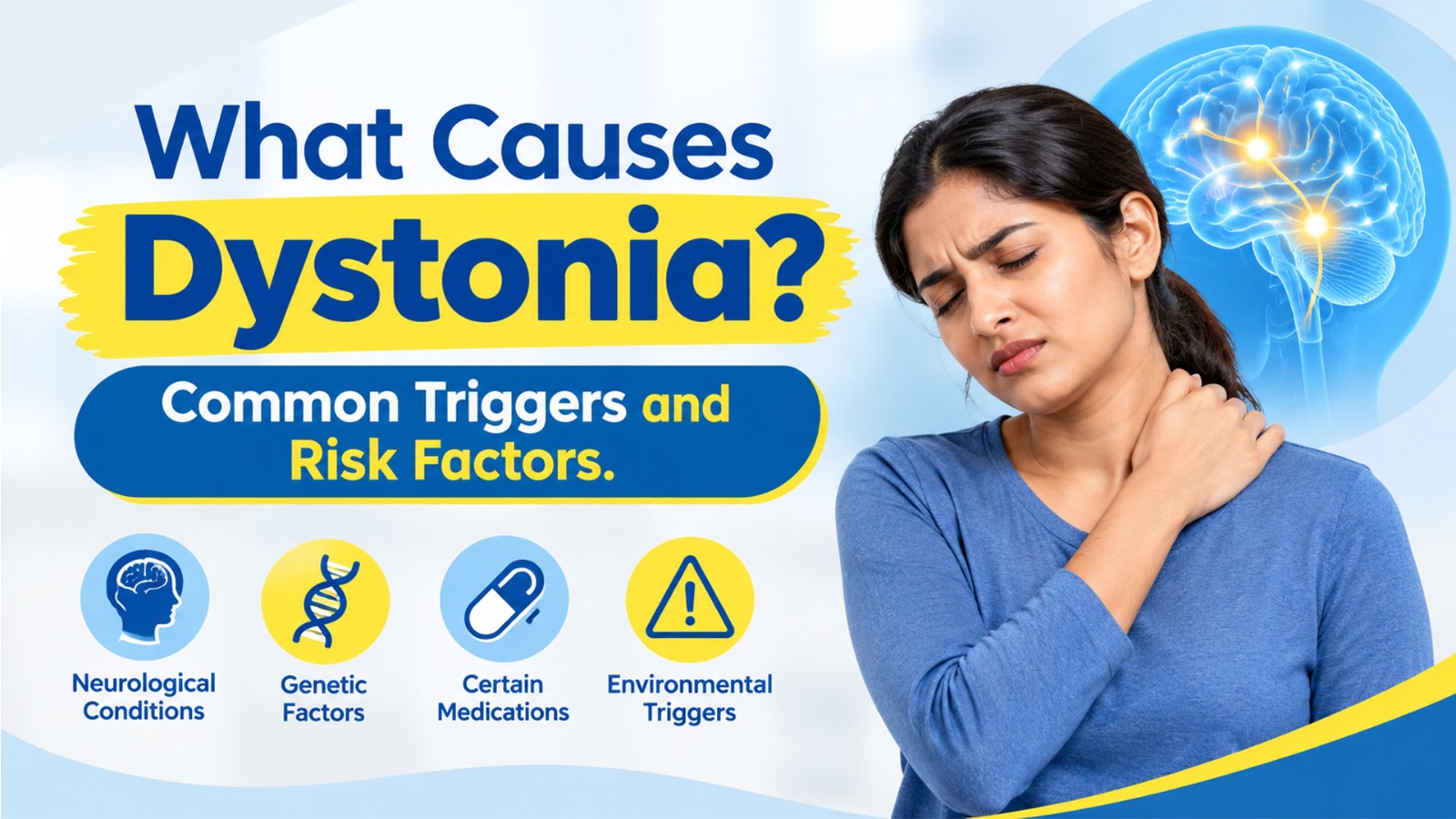
Dystonia is a movement disorder in which muscles contract involuntarily, causing twisting movements or abnormal postures. It is linked to abnormal functioning of the brain networks that control movement. Understanding what causes dystonia is not always straightforward: in some people, a cause can be identified, and in many it cannot.
This article explains the main causes of dystonia, the factors that raise the likelihood of developing it, and the everyday triggers that may worsen symptoms. For an overview of what dystonia is, including its symptoms and types, see our related guide.
How Does Dystonia Develop?
Movement depends on several brain regions working together, including the basal ganglia, thalamus, cerebellum, and motor cortex. In dystonia, these networks do not coordinate muscle activity normally. As a result, opposing muscles contract together or for too long, producing twisting or repetitive movements and abnormal postures. The muscles and nerves themselves are usually healthy.
Causes, Risk Factors and Triggers: What Is the Difference?
- Causes: The underlying reasons dystonia develops, such as a gene change or brain injury.
- Risk factors: Factors that make dystonia more likely but do not guarantee it will develop.
- Triggers: Factors that may worsen symptoms in someone who already has dystonia.
What Are the Main Causes of Dystonia?
Doctors generally classify dystonia according to its underlying cause. The exact cause is not always identifiable.
Genetic (Inherited) Dystonia
Changes in certain genes can cause dystonia, and some forms run in families. Examples include changes in TOR1A and THAP1, as well as GCH1, which is associated with dopa-responsive dystonia, a form that often improves markedly with levodopa.
A family history raises the likelihood of genetic dystonia, but many people with the condition have no affected relatives. Genetic testing may be particularly useful when dystonia begins in childhood or young adulthood, or when several family members are affected.
Learn more about inherited and acquired forms of the condition in our guide to dystonia, its causes, symptoms, and types.
Acquired Dystonia
Acquired dystonia results from a known cause that affects the brain, such as:
- Stroke.
- Head injury.
- Birth-related brain injury or cerebral palsy.
- Brain infections or tumours.
- Exposure to certain medicines or toxins.
- Other neurological or metabolic conditions.
Idiopathic Dystonia
When no genetic or acquired cause can be found despite a thorough assessment, dystonia is called idiopathic. This is common, particularly in adults whose dystonia affects one body area, such as the neck, eyelids, or hand.
Some of these cases may involve genetic factors that are not yet understood. Not finding a cause does not prevent treatment; management is based on the person's symptoms and individual needs.
Can Medicines Cause Dystonia?
Yes. Some medicines, including certain antipsychotic and anti-sickness (antiemetic) drugs, can cause dystonia. It helps to distinguish two situations:
- Acute drug-induced dystonia: This can appear within hours or days of starting a medicine or increasing the dose. Symptoms may include sudden neck twisting, jaw spasms, or eye deviation. Prompt medical care and a review of the medicine can help manage the reaction.
- Tardive dystonia: This develops after longer exposure to certain medicines and may persist even after the responsible medicine is stopped. It may require long-term management.
Never stop a prescribed medicine on your own. Speak to your doctor, who can review the benefits and risks and adjust treatment safely.
Can Stroke or Head Injury Cause Dystonia?
Yes. Damage to the brain regions involved in movement control can lead to dystonia. The affected body area varies and may include an arm, a leg, one side of the body, the face, or the neck, depending on where the brain was affected.
Symptoms sometimes appear weeks, months, or even years after the injury, which can make the connection difficult to recognize.
Which Other Conditions Can Be Linked to Dystonia?
Dystonia may occur as part of other neurological conditions, including Parkinson's disease, Huntington's disease, and Wilson's disease.
Wilson's disease is a treatable disorder of copper metabolism, so doctors may consider it in younger people who develop dystonia or other movement problems. Read more in our guide to Wilson's disease: causes, symptoms, and treatment.
A specialist can also help distinguish dystonia from other movement disorders, including Parkinson's disease, based on symptoms and clinical findings.
What Are the Risk Factors for Dystonia?
Factors associated with a higher likelihood of dystonia include:
- A family history of dystonia.
- Earlier brain injury, including birth-related injury, stroke, or infection.
- Exposure to medicines known to cause dystonia.
- Another neurological condition.
Repetitive Tasks and Task-Specific Dystonia
Task-specific dystonia, such as writer's cramp or musician's dystonia, appears only during a particular skilled, repetitive activity. It is seen in some people who perform such movements intensively, but most people who write, type, or play an instrument never develop it.
Repetition is therefore best understood as one possible contributing factor in people who may already be predisposed, rather than as a general risk factor for dystonia.
Having a risk factor does not mean you will develop dystonia.
What Triggers Dystonia Symptoms?
Triggers do not necessarily cause dystonia, but they may worsen symptoms. Many people report that their symptoms are affected by:
- Stress and anxiety.
- Tiredness or poor sleep.
- Illness.
- Particular activities or postures.
Stress may worsen dystonia symptoms, and the pattern differs from person to person. Keeping a simple symptom diary can help you and your neurologist identify what affects you.
When Should You Seek Medical Help?
See a neurologist if you notice involuntary twisting, a persistently tilted neck, eyelid spasms, or hand cramping that interferes with daily life. An earlier assessment can help identify any treatable cause.
Seek urgent medical help if symptoms begin suddenly, particularly if they occur with weakness, difficulty speaking, or problems with swallowing or breathing. These symptoms may indicate a stroke, a reaction to a medicine, or another emergency and should not wait for a routine appointment.
How Is Dystonia Treated?
Treatment depends on the type of dystonia, its severity, and whether an underlying cause is identified. Options may include:
- Botulinum toxin injections: Often used for dystonia affecting one or a few body areas.
- Oral medicines: Selected according to age, dystonia type, and symptoms.
- Rehabilitation therapies: Physiotherapy, occupational therapy, and speech therapy may help address specific difficulties.
- Deep brain stimulation (DBS): May be considered for selected people with severe dystonia that has not responded adequately to other treatments, following specialist assessment.
- Treatment of the underlying cause: This may include adjusting a causative medicine or managing an associated medical condition.
No single treatment suits everyone, and a specialist will tailor the plan to individual needs. Discuss the available options with your neurologist.
Consulting a Dystonia Specialist in Hyderabad
A neurologist with experience in movement disorders can assess your symptoms, investigate possible causes, and recommend suitable treatment. Prof. Dr. Rupam Borgohain evaluates dystonia and other movement disorders at the Parkinson's Disease & Movement Disorder Research Center.
If you are experiencing persistent involuntary movements or abnormal postures, consider arranging a consultation to discuss your symptoms and treatment options.
Frequently Asked Questions
What is the most common cause of dystonia?
In many adults, no cause is found. In children and young adults, genetic causes and early brain injury are more often identified.
Does stress cause dystonia?
Stress is not generally considered a direct cause of dystonia, but it may worsen symptoms in people who already have the condition.
Is dystonia always permanent?
It depends on the cause. Acute drug-induced dystonia often settles with appropriate treatment, while many other forms are long-term conditions that can be managed.
Can dystonia appear years after a stroke or head injury?
Yes. The onset of dystonia can be delayed, sometimes by months or years after a stroke or head injury.
Will I develop dystonia if a relative has it?
Not necessarily. A family history may increase the likelihood of certain genetic forms, but many relatives of affected people never develop dystonia.
Which doctor should I see for dystonia?
Consult a neurologist, ideally one with experience in movement disorders.
Conclusion
Dystonia may be genetic, acquired, or idiopathic, and the exact cause is not always identifiable. Risk factors and triggers help explain who may be more likely to develop the condition and what may worsen symptoms, but an accurate diagnosis helps guide treatment.
If you notice persistent involuntary movements or abnormal postures, seek an assessment from a neurologist.
To arrange a consultation with Prof. Dr. Rupam Borgohain, book an appointment.
Disclaimer: This article is for general information and does not replace personal medical advice. Please consult a qualified neurologist for diagnosis and treatment.