 +91 9618519486

 Yashoda Hospital,
Hitec City
For many people living with Parkinson's disease, medication provides good symptom control for years. But as the condition progresses, some patients start to notice medications wearing off faster, side effects becoming harder to manage, or symptoms like tremor and stiffness becoming less responsive to treatment. For this group, deep brain stimulation, commonly known as DBS surgery, is one of the most established and effective advanced treatment options available.
DBS isn't the right choice for everyone, and it isn't a cure. But for well-selected patients, it can meaningfully improve quality of life. This guide covers how DBS surgery works, who it's suitable for, its benefits and risks, and what recovery actually looks like.
What Is Deep Brain Stimulation?
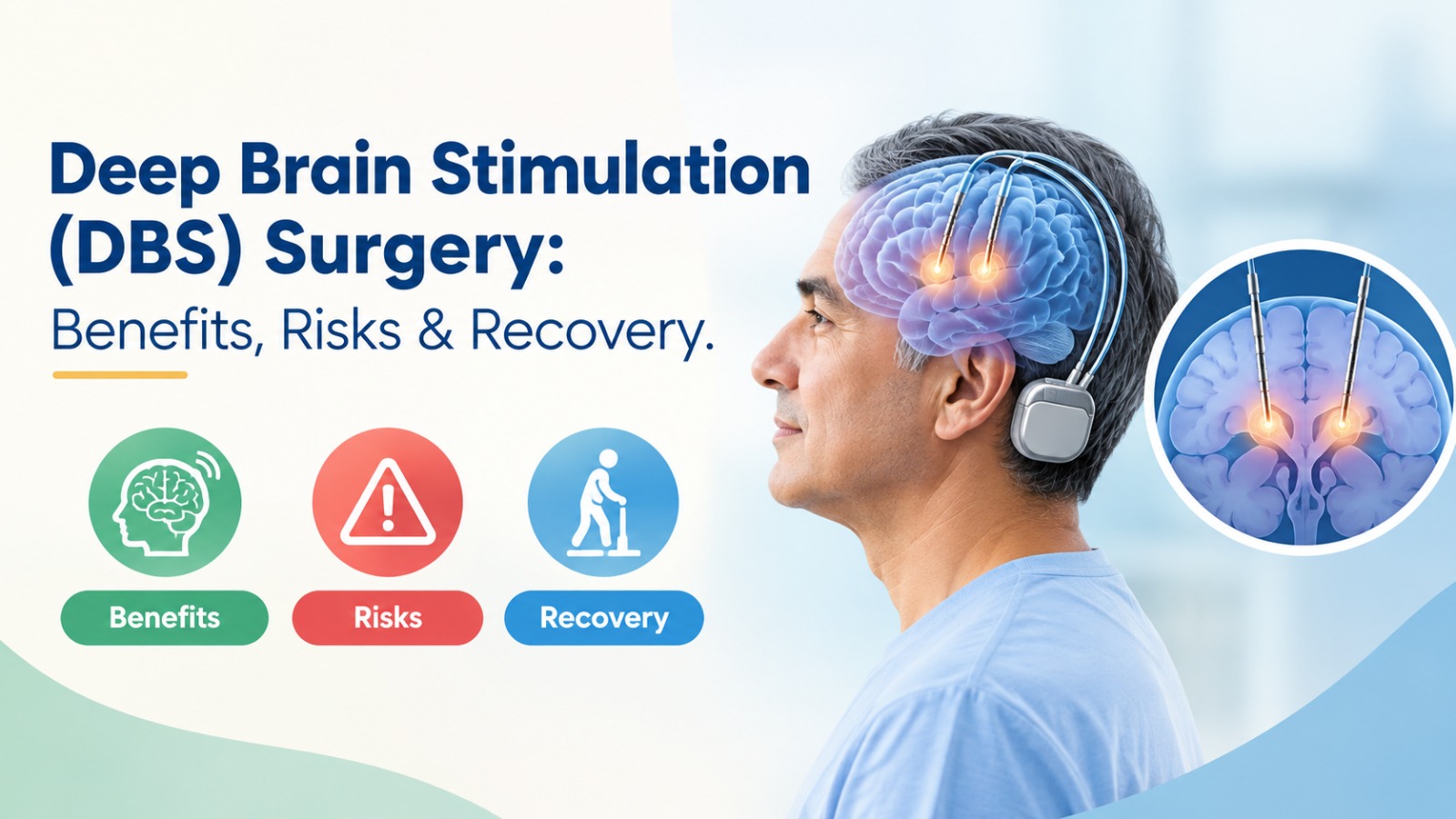
Deep brain stimulation is a surgical treatment that involves implanting thin electrodes into specific, carefully targeted areas of the brain that are involved in movement control. These electrodes are connected to a small device, similar to a pacemaker, implanted under the skin near the collarbone, which sends controlled electrical impulses to help regulate abnormal brain activity contributing to Parkinson's motor symptoms.
Unlike medication, which works throughout the entire body, DBS delivers highly targeted stimulation to specific brain circuits. This is why it can be particularly effective for motor symptoms that have become difficult to manage with medication alone.
How Does DBS Surgery Work?
DBS surgery is typically performed in stages:
- Pre-surgical evaluation. A thorough assessment by a multidisciplinary team, including a neurologist, neurosurgeon, and often a neuropsychologist, determines whether DBS is an appropriate option.
- Electrode implantation. Thin electrodes are surgically placed into targeted brain regions, most commonly the subthalamic nucleus or globus pallidus, using imaging guidance for precision.
- Device implantation. A pulse generator, the device that powers the electrodes, is implanted under the skin, usually near the chest, and connected via a thin wire under the skin.
- Programming and adjustment. After a recovery period, the device is activated and gradually programmed by the neurology team to find the settings that provide the best symptom control with the fewest side effects.
This programming process can take several visits over weeks or months, since finding the right stimulation settings is a gradual, individualized process.
Who Is a Good Candidate for DBS Surgery?
DBS isn't the first-line treatment for Parkinson's disease, and not every patient is a suitable candidate. Generally, good candidates tend to have:
- A confirmed diagnosis of Parkinson's disease, rather than an atypical parkinsonian syndrome
- A history of good response to levodopa, even if that response has become less consistent over time
- Motor fluctuations, such as "on-off" periods, or dyskinesias that are difficult to manage with medication adjustments alone
- Tremor that hasn't responded well to medication
- Reasonably preserved cognitive function, since significant dementia can affect candidacy and outcomes
A thorough evaluation by a specialized neurology and neurosurgery team is the only way to determine individual candidacy, since these factors are weighed together rather than in isolation. If you're exploring this path, our guide on How to Choose the Right Neurosurgeon for DBS Surgery covers what to look for in a surgical team.
Benefits of DBS Surgery
For appropriately selected patients, DBS surgery can offer meaningful improvements, including:
- Reduced tremor, often significantly, even when medication alone hasn't fully controlled it
- Improved motor fluctuations, including more consistent "on" time throughout the day
- Reduced dyskinesias, the involuntary movements that can develop as a side effect of long-term levodopa use
- Potential reduction in medication dosage, which can, in turn, reduce medication-related side effects
- Improved quality of life, particularly in daily tasks affected by tremor and rigidity
It's worth noting that DBS tends to be most effective for motor symptoms that already respond to levodopa. Non-motor symptoms and motor symptoms that don't respond to medication, such as some balance and freezing issues, typically don't improve as much with DBS.
Risks and Side Effects of DBS Surgery
Like any surgical procedure, DBS carries risks that should be carefully weighed against potential benefits:
- Surgical risks, including infection, bleeding, or, rarely, stroke related to the implantation procedure
- Hardware-related issues, such as lead migration, device malfunction, or the need for battery replacement over time
- Speech and swallowing changes, which can occur in some patients following stimulation
- Mood and cognitive effects, including changes in mood and, in rare cases, cognitive changes, particularly in patients with pre-existing cognitive vulnerability
- Stimulation-related side effects, such as tingling sensations or muscle contractions, which are often adjustable through reprogramming
Most serious surgical complications are relatively uncommon in experienced surgical centers, but they aren't zero, which is why patient selection and surgical expertise both matter significantly.
What to Expect During Recovery
Immediately After Surgery
Most patients stay in the hospital for a short period, often one to a few days, for monitoring. Some mild swelling, discomfort at the incision sites, and fatigue are common in the initial days following surgery.
The First Few Weeks
The brain needs time to heal before the device is activated, so there's typically a waiting period, often two to four weeks, before programming begins. During this time, patients are usually advised to avoid strenuous activity and follow specific wound care instructions.
Programming Period
Once activated, the stimulation settings are adjusted gradually over a series of follow-up visits. This process can take weeks to months as the team fine-tunes stimulation parameters alongside medication adjustments to find the most effective, best-tolerated combination.
Longer-Term Recovery and Adjustment
Many patients notice significant symptom improvement within the first few months, though the full benefit often continues to be refined over the first year. Regular follow-up appointments remain important long-term, since occasional reprogramming may be needed as the disease or symptoms evolve.
Rehabilitation Alongside DBS
Physical therapy and structured exercise often become even more effective once motor symptoms are better controlled through DBS. Many patients find they're able to engage more fully with balance and mobility exercises after surgery. Our Exercise Guide for Parkinson's patients covers strategies that pair well with post-DBS rehabilitation.
Nutrition also remains relevant after surgery, particularly around medication timing, which may be adjusted as dosages change following DBS. Our Diet Guide walks through how to structure meals around Parkinson's medication.
Does DBS Help with Handwriting and Fine Motor Symptoms?
Some patients notice improvement in fine motor symptoms, including handwriting, following DBS surgery, since these are often linked to the same tremor and rigidity that DBS targets.
However, results vary considerably between individuals, and micrographia doesn't always fully resolve even when other motor symptoms improve significantly. Our guide on Micrographia Explained covers why this handwriting change happens in the first place and how it relates to broader motor symptom control.
DBS Surgery Is Not a Cure
It's worth being clear about this: DBS does not stop or reverse the progression of Parkinson's disease. It manages specific motor symptoms by modulating abnormal brain activity, but the underlying loss of dopamine-producing neurons continues over time. Many patients still require medication after DBS, often at reduced doses, and some symptoms, particularly non-motor ones, may continue to progress regardless of the procedure.
Understanding this distinction is important for setting realistic expectations before moving forward with surgery.
When to Discuss DBS with Your Neurologist
It's reasonable to bring up DBS as a potential option if:
- Medication is becoming less effective or requires increasingly frequent adjustments
- Motor fluctuations or dyskinesias are significantly affecting daily life
- Tremor remains difficult to control despite medication trials
- You want to understand whether you might be a candidate, even if you're not ready to pursue surgery immediately
Your neurologist can refer you for a formal DBS evaluation if appropriate, which typically involves several specialists assessing candidacy from different angles.
Frequently Asked Questions
Is DBS surgery painful?
Most of the procedure is performed under a combination of local and general anesthesia, and while some discomfort is expected during recovery, the surgery itself is not typically described as painful.
How long does the effect of DBS last?
DBS can provide symptom benefit for many years, with battery replacement or device adjustments needed periodically depending on the device type.
Can DBS be reversed?
Yes, unlike some other neurosurgical procedures, DBS is generally considered reversible, since the electrodes and device can be removed or deactivated if necessary.
Will I still need medication after DBS surgery?
Most patients still need some medication after DBS, though many are able to reduce their dosage under medical supervision.
How is a DBS candidate selected?
Candidacy is determined through a multidisciplinary evaluation that considers diagnosis, medication response, symptom pattern, and cognitive status, rather than any single factor alone.
Final Thoughts
Deep brain stimulation is one of the most effective advanced treatments available for Parkinson's disease, offering meaningful symptom relief for well-selected patients when medication alone is no longer enough. It isn't a cure, and it carries real risks, but for the right candidate, it can significantly improve day-to-day quality of life.
Wondering if DBS surgery might be right for you? Book an appointment with our specialists, or contact us to schedule a candidacy evaluation.
This article is intended for informational purposes only and does not constitute medical advice. Please consult a qualified healthcare professional to determine whether DBS surgery is appropriate for your specific condition.